
Making inland shipping sustainable without a level playing field is not an energy transition, but a market distortion
A column in Trouw magazine by Ton van der Molen
27 MAY 2026 | #SUSTAINABILITY
As a sustainability frontrunner, AMS Barging is investing heavily in innovation, while stricter regulations are placing the shipping company in an increasingly difficult position.
What applies to many sectors also applies to inland shipping: a company that wants to remain relevant in the future invests in sustainability. AMS Barging, the shipping company from Hendrik-Ido-Ambacht with a fleet of 17 inland vessels, is among the frontrunners in making European tanker shipping more sustainable.
Co-owner Ton van der Molen explains: “Ever since 2007, the year of our founding, we (owners Igor Jansen and Ton van der Molen) have been continuously looking for opportunities to innovate and become more sustainable, and for new technologies. This has led, among other tings, to our LNG-electric and diesel-electric vessels. These types of ships deliver fuel savings of around 25-30%.”
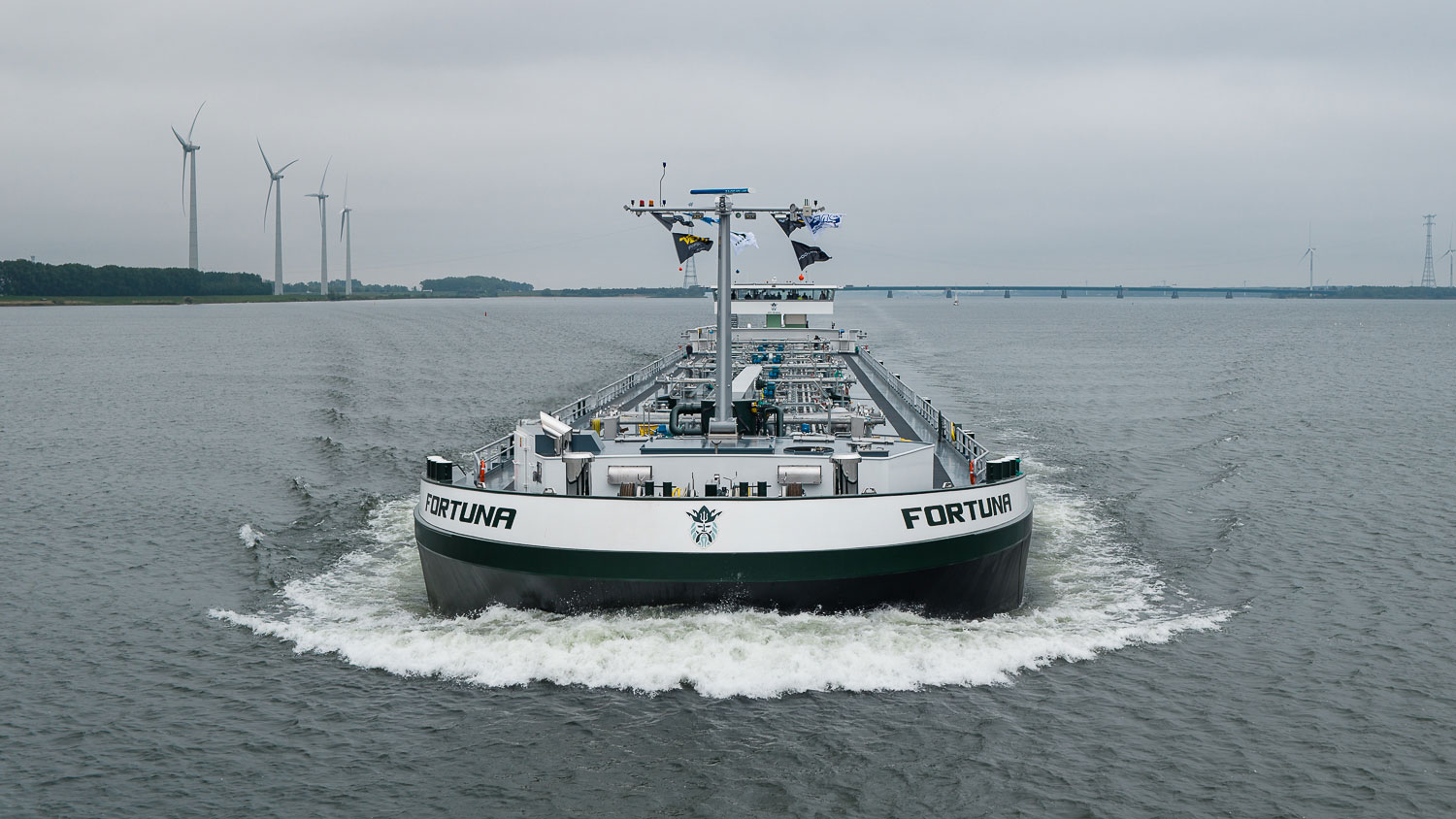
Two brand-new barges provide tangible proof of Van Der Molen’s words. “The MTS Fortuna has just started operations and the MTS Felicitas will follow in September. These are both modern bunker barges with diesel-electric propulsion and efficient Z-drives.” Moreover, the tanks on board are prepared for alternative fuels, such as methanol. In this way, we are becoming more sustainable, step by step; together with our customers, we now transport all kinds of fuels. Our slogan is therefore clear: We Move Energy.
Revenue disappears abroad
There is one major catch. AMS Barging demonstrates that a sustainable, smart, and safe future for inland shipping is already possible today, but European regulations are acting as a constraint. Van der Molen explains: “We are concerned about RED III. This directive stipulates that more renewable energy must be included in the energy mix for maritime and inland shipping. The irony is that Dutch oil companies and traders have had to comply with the new blending obligations since January 2026, while other countries will follow later. International shipping companies looking for cheap fuel are no diverting to Antwerp and Hamburg, among others.In our fleet of seven bunker vessels, we see that a number of contracts have already been terminated. This means that not only revenue is disappearing abroad, but also strategic knowledge and people.”
Van der Molen is adamant: “Making the bunkering market for maritime shipping more sustainable without a level playing field is not an energy transition, but a market distortion. We have been investing proactively in sustainability since our establishment and truly believe in the energy transition. But of course, competitiveness must be maintained and the playing field must be fair. It is good that the Netherlands wants to take the lead, but this must not come at the expense of an entire sector. This must be arranged quickly and properly at the European level.”
